Screened porch framing materials: wood vs aluminum vs vinyl
September 10, 2026
Last updated: September 10, 2026
Key Takeaways
- The frame choice matters most because a screened porch is not just a screen.
- When the framing moves, the screen sags.
- Should the material not take fasteners well, doors and corners get sloppy.
- Whenever the finish breaks down, you start chasing rot, corrosion, or bowing.
Choosing framed material for a screened porch comes down to three names: screened porch framing materials usually come down to wood, aluminum, or vinyl. In most jobs, wood is the most flexible, aluminum is the most stable in wet or low-maintenance jobs, and vinyl is the niche pick for low upkeep where you can live with design limits. Short version. The longer one? Your best frame depends on how the porch is built, how much moisture it gets, and whether appearance, resale, or upkeep matters more to you. Unsure? Talk to a qualified contractor or architect before you decide.
I write about exterior building materials and enclosure systems, so I care less about sales language and more about what fails, what rots, what dents, and what a contractor can actually build cleanly.
What matters most in a screened porch frame?
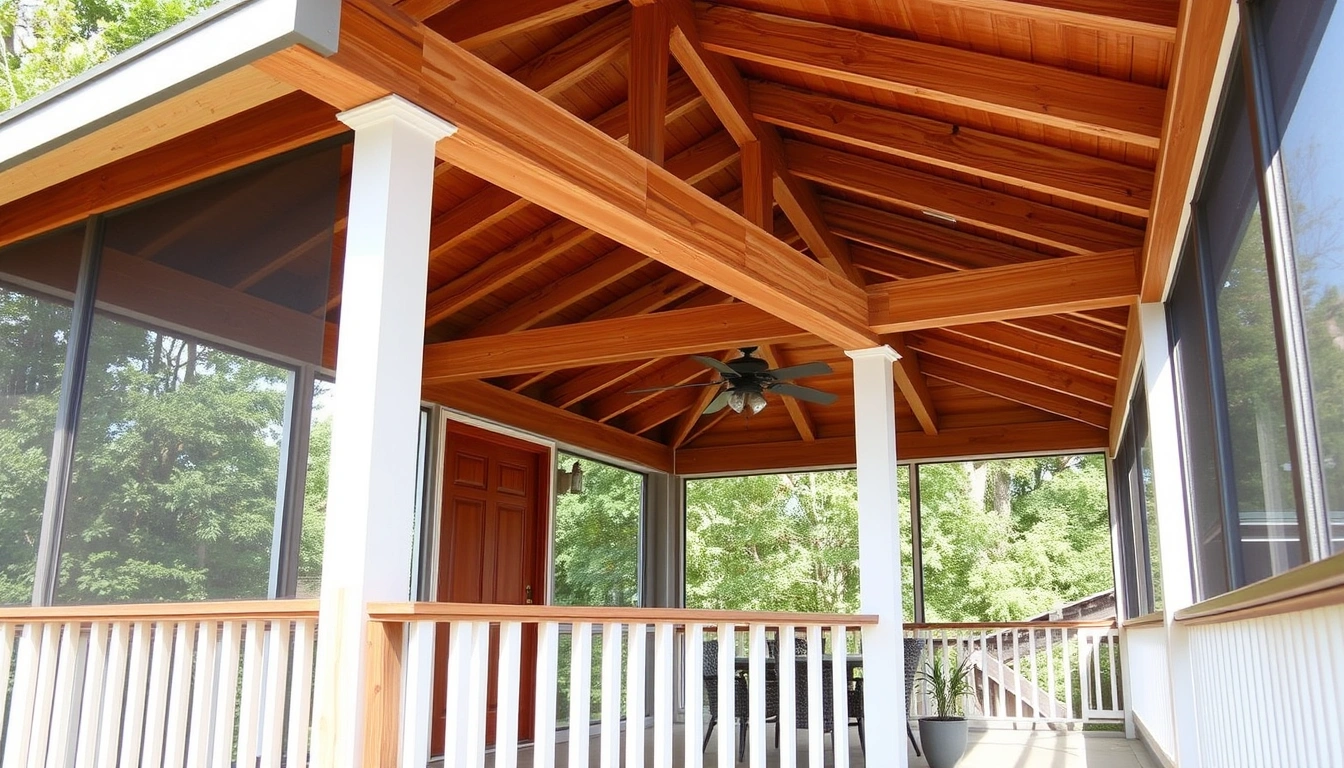
A screened porch is not just a screen. It has to hold panels, fight wind, stay square, accept trim, and survive a damp semi-outdoor environment. If the framing moves, the screen sags. When the material does not hold fasteners well, doors and corners get sloppy. And when the finish gives out, rot, corrosion, or bowing shows up fast.
Most homeowners are really asking not “which material is strongest?” but “which one causes the fewest headaches for my climate, design, and budget tolerance over the next 10 to 20 years?” To be fair, the safest choice is the one that matches the site and the build details, so consult a professional if the porch is exposed or unusually complex.
That is why the material list usually settles into three practical groups:
- Wood, especially pressure-treated lumber or exterior-grade framing
- Aluminum, usually as extrusions or a system built for porch enclosures
- Vinyl, often as a lower-maintenance cladding or framing component in prebuilt systems
Each can work. None is the universal winner. Pick the wrong one, and the site will remind you.
The honest side-by-side
| Criteria | Wood | Aluminum | Winner for [condition] |
|---|---|---|---|
| Ease of custom design | Best for odd shapes, trim details, and field changes | Moderate; usually tied to system parts | Wood for custom builds |
| Moisture resistance | Depends on treatment, detailing, and maintenance | Strong if properly coated and isolated from dissimilar metals | Aluminum for wet climates |
| Fastener holding | Excellent | Good in designed systems, weaker for ad hoc field fastening | Wood for doors and trim-heavy work |
| Maintenance burden | Highest; paint, stain, and rot checks matter | Low to moderate; finish scratches and corrosion points still matter | Aluminum for low-upkeep owners |
| Appearance | Warmest and easiest to match a house | Clean, slim, more modern | Wood for traditional homes |
| Structural forgiveness | Very forgiving for field modifications | Less forgiving; best when the system is engineered | Wood for remodels |
| Corrosion / rot risk | Rot is the main risk | Corrosion is the main risk if details are bad | Aluminum in humid exposure, with proper detailing |
| Repairability | Easy to patch, sister, or replace sections | More dependent on matching profiles and finishes | Wood for DIY repair culture |
| System limitations | Fewest limits | More profile and connector constraints | Wood for one-off builds |
| Best use case | Custom porch, traditional house, onsite flexibility | Moist or coastal-adjacent settings, clean lines, low upkeep | Depends on climate and maintenance tolerance |
The table leaves out one thing a generic piece usually misses: the frame material is only half the durability story. Fastener choice, flashing, the roof overhang, and whether the porch stays dry matter just as much. A bad roof detail can beat a good material. A well-detailed porch can make an average material look smart. For code and detailing basics, see the International Residential Code and the American Wood Protection Association.
Wood wins for custom screened porches, but it asks for upkeep
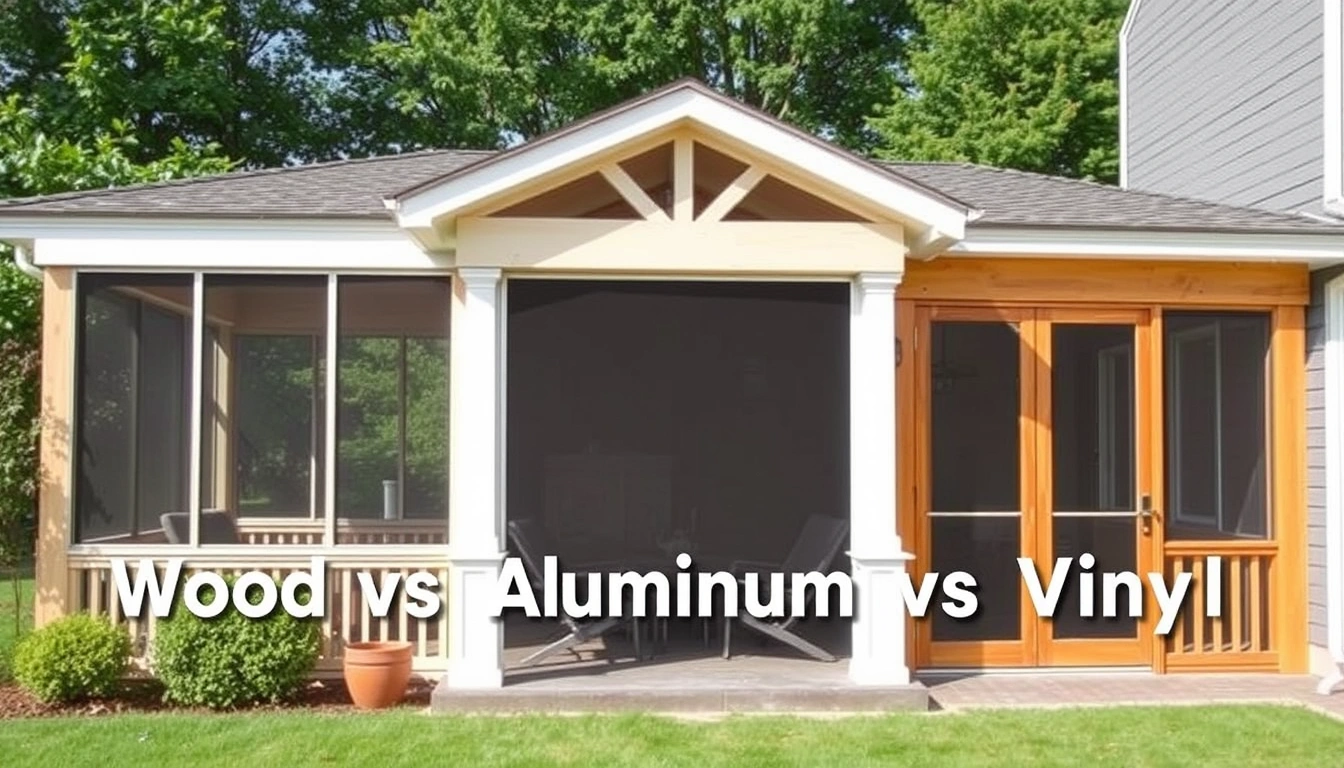
When the porch is not a cookie-cutter rectangle, wood usually wins. Odd bays, tapered rooflines, decorative columns, matching trim, or a house style that needs stain-grade warmth all point in the same direction. This is the easiest material to shape and finish. Standard carpentry, common fasteners, late-stage field adjustments — wood takes them in stride. A contractor can add blocking, change a reveal, or trim a post to fit without waiting on a proprietary part.
That flexibility is a big reason wood still ends up as the default in a lot of porch work. It also suits a homeowner who may want a storm door, a beadboard ceiling, or a porch that blends into an older facade. In those cases, wood usually looks like it belongs. For examples of how wood is detailed in exterior work, see the deck framing article and the exterior trim guide.
The downside? Not subtle. Wood asks for disciplined detailing. Screen porches are damp by nature, so untreated or poorly protected wood is usually the wrong answer. Even pressure-treated framing can warp, check, or move if it is installed wet or left exposed at cut ends. Paint failure and trapped moisture lead to rot at joints, around fasteners, and near the bottom of posts where splashback hits. Should the porch exposure be unclear, talk to a professional before you commit.
I would skip wood if the porch sits in a very wet setting, if the owner will not repaint or inspect it, or if the design leaves little roof protection. I would also pass on it where the budget only covers “good enough” craftsmanship. Wood punishes sloppy flashing and lazy maintenance. Hard stop.
A useful rule: wood is often the best choice when the project is custom and the owner is willing to maintain it. Want a porch that feels built into the house, and you are fine with periodic repainting or staining? Wood is hard to beat. Want a set-it-and-forget-it enclosure? Wrong pick.
For reference, the treatment standards often discussed in exterior framing include AWPA use categories for treated wood and exterior fastener guidance from building codes and manufacturer instructions. The American Wood Protection Association and the International Code Council are the right places to verify those details before work starts.
Aluminum is the cleanest pick for low-maintenance durability
Aluminum works best when the owner wants fewer chores and the porch system is planned around the material from day one. In many screened porch systems, it shows up as framing or screen support because it resists rot, stays dimensionally stable, and can be made into slimmer profiles than wood. That last bit matters more than many buyers expect: slimmer members can make the porch feel lighter and less bulky.
I also like aluminum for damp climates and homes where the porch will face constant humidity, wind-driven rain, or coastal air. It will not rot like wood. It also does not swell and shrink with seasonal moisture swings in the same way. That stability helps screen panels stay tighter and corners stay cleaner. For broader performance context, see the AAMA guidance on coatings and finishes.
But aluminum is not magic. It can dent. It can scratch. And if the finish is damaged or the material is coupled badly with dissimilar metals, corrosion can show up in ugly places. Aluminum systems also tend to be less forgiving on-the-fly. Should the porch need a lot of site improvisation, the material can feel restrictive. I would not choose aluminum for a highly ornate historic house where thick extrusions would look out of place, and I would not choose it for a builder who wants to solve every problem with a circular saw and a box of framing nails.
Another limit: some aluminum porch systems are only as good as their connectors, corner details, and powder coat or anodized finish. If the product literature does not clearly state how corners, fasteners, and dissimilar metals are handled, I would treat that as a warning sign. The material may be fine; the system may not be.
This is the best pick for a homeowner who wants a porch frame with a lower maintenance curve than wood and a more refined look than chunky stock lumber. It is especially sensible if the porch is part of a modern home, a coastal property, or a project where the structure is designed around a manufactured enclosure system rather than improvised on site.
For standards-minded readers, aluminum framing and finishes are commonly discussed in the context of AAMA performance and coating guidance, plus the fastener and corrosion rules in the building code. Those are the documents I would check before I accepted a system’s marketing claims.
Vinyl is the low-upkeep compromise, not the universal answer
Vinyl only wins in narrower situations, but there it can be the least annoying option. I would look at vinyl when the top priority is reducing visible maintenance and the porch design is simple enough to fit the material’s limitations. Vinyl components do not need paint the way wood does, and they can present a clean, uniform surface that appeals to owners who want minimal upkeep.
That said, vinyl is the one I would be most cautious about recommending as a primary structural framing material. It is not the same as a fully engineered framing system in the way aluminum can be. Vinyl can be more sensitive to heat, expansion, and impact. In hot sun, that matters. In a porch with large spans, heavy doors, or a structure that sees a lot of daily traffic, it can be the least forgiving of the three.
I would choose vinyl only if the system is designed for it, the spans are modest and the homeowner values easy cleaning more than structural flexibility. It can make sense for simple porch enclosures where appearance and maintenance rank above customization. It is also a reasonable choice when matching existing vinyl trim matters more than matching historic wood details.
The drawback is that vinyl often looks and behaves like a compromise because it is one. It can limit trim profiles, complicate repairs, and show age in ways that are hard to disguise. If the project needs crisp architectural detail, if the home has deep eaves and substantial columns, or if you expect to modify the porch later, vinyl is the material I would leave on the shelf.
One more thing generic articles skip: vinyl systems vary a lot. Some are cosmetic enclosure components; some are part of a broader porch package. If the product does not clearly state the load path, fastening method, and allowable spans, I would not treat it like a structural frame without checking the engineering paperwork.
When the verdict flips: exception scenarios
Choose a different material if one of these applies, because each one changes the decision.
-
Historic or high-detail architecture: Wood can beat aluminum and vinyl if the porch must match existing trim, column proportions, or a painted historic facade. The material can be shaped and blended in ways the others often cannot.
-
Coastal or very damp exposure: Aluminum often beats wood and vinyl where moisture, salt air, or frequent wetting is a constant issue. Wood’s rot risk rises fast if detailing is poor, and vinyl can struggle with heat and movement.
-
Large custom openings or frequent field changes: Wood jumps back to the front if the project involves odd angles, custom doors, or a remodel where the opening is not perfectly square. Aluminum and vinyl both become more restrictive when the site is not cooperating.
-
Minimal upkeep above all else, with simple geometry: Vinyl can move up if the porch is straightforward, the spans are modest and the homeowner values easy cleaning more than structural flexibility.
Those are not abstract edge cases; they are the jobs that decide the outcome.
What does the building code and maintenance reality say?
The code will not hand you a beauty-contest winner, but it does force a more honest call. A screened porch frame has to satisfy load, fastening, and weather-resistance requirements, and the details matter more than the label on the bundle. The International Residential Code (IRC) is the first place I would check for structural and fastening requirements. For wood, I would also look at AWPA treatment guidance. For aluminum system performance and finish expectations, AAMA documents are the right reference point.
That matters because the safest-sounding material is useless if the connectors, flashing, or fasteners are wrong. For example, wood needs treated or naturally durable material where exposure is likely. Aluminum needs corrosion-aware hardware and good isolation from incompatible metals. Vinyl needs a system that clearly states what it is designed to support. Without that paper trail, you are trusting marketing copy where you should be reading specifications.
Maintenance is the other half of the story. A homeowner who will inspect joints, touch up paint, and replace soft wood before decay spreads can get long life from wood. A homeowner who wants the lowest visible maintenance and is willing to live within the manufacturer’s system limits will usually be happier with aluminum. Vinyl only makes sense if the porch is simple and the owner wants easy cleaning more than design freedom. For more on weather exposure and upkeep, see the screen porch maintenance guide.
My verdict: which one should you choose?
Choose wood if you want the most custom-looking screened porch, need the easiest field modifications, and are willing to maintain paint, stain, and moisture protection. Choose aluminum if you want the best low-maintenance balance for a damp climate or a clean-lined porch system built around stable profiles. Choose vinyl if your porch is simple, your spans are modest, and your priority is reducing upkeep rather than maximizing design flexibility. If you are comparing bids, ask each contractor to explain the framing material, fastening method, and expected maintenance schedule in writing.