Screened porch flooring options compared for durability and comfort
September 10, 2026
Last updated: September 10, 2026
Key Takeaways
- Cement board, sleepers, moisture barriers, and flashing details often decide whether a floor lasts 5 years or 20.
- A screened porch is a weird floor to shop for.
- In screened porch flooring options compared for durability and comfort, that matters because dust, pollen, and leaf debris still come inside.
- Use evening by evening? Then the finish choice matters more.
Table of contents
- The short answer
- The real decision: what matters more, long-term toughness or barefoot comfort?
- Porcelain tile: the hard-wearing option when the structure is right
- Composite decking and PVC boards: the comfort-to-maintenance trade
- What about wood: the warmest feel, but the highest upkeep
- Concrete, painted concrete, and concrete coatings: the practical answer on a slab
- The honest side-by-side
- What choice I would make for different screened porches
- When should you change the answer entirely?
- So which screened porch floor should you choose?
- FAQ
For many screened porch flooring options compared for durability and comfort, the short answer is porcelain tile when the porch is fully protected from water intrusion and the framing can take the weight; I would go with composite decking or PVC deck boards if you want a surface that is easier to live with under bare feet and the porch might get damp. That call comes from how exterior materials act in sun, standing moisture, and temperature swings. No fairy dust here.
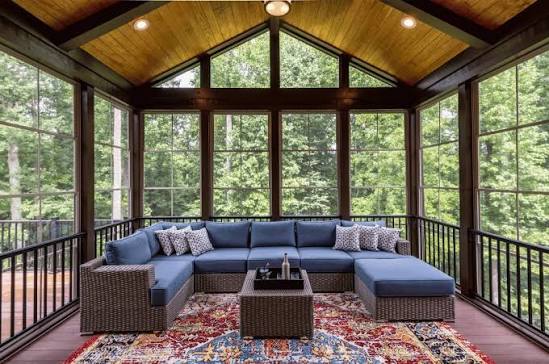
A screened porch is a strange floor to shop for. Not indoors, not outside. Wind-driven rain, humidity, grit, and UV still show up. That awkward middle is exactly why the wrong finish quits early: some swell, some get scorching hot, some feel icy and hard, and some hang onto mildew in all the wrong places.
The real decision: what matters more, long-term toughness or barefoot comfort?
Durability and comfort pull in different directions; the best surface is the one that fits the porch’s exposure, framing, and the way you actually use it.
If I had to turn it into one question, I’d ask this: do you want the floor to act like an exterior surface first, or like part of the living space first? Style comes second. A screened porch over a dry, elevated deck can handle a very different setup than a slab porch in a humid climate.
Here is the bit most generic advice skips: the subfloor matters as much as the finish. Put a beautiful surface over a damp slab, poor drainage, or an uninsulated crawlspace, and it can fail anyway. Cement board, sleepers, moisture barriers, and flashing details often decide whether a floor lasts 5 years or 20. I’m not giving you a miracle material because there isn’t one.
Want easy cleanup, water resistance, and the longest service life? Hard surfaces win. Want something you can stand on barefoot after sunset, or a floor where kids can sprawl without complaint? Softer, slightly warmer choices win. The catch is obvious: the friendliest-feeling options usually have the shortest exterior-friendly résumé.
Porcelain tile: the hard-wearing option when the structure is right
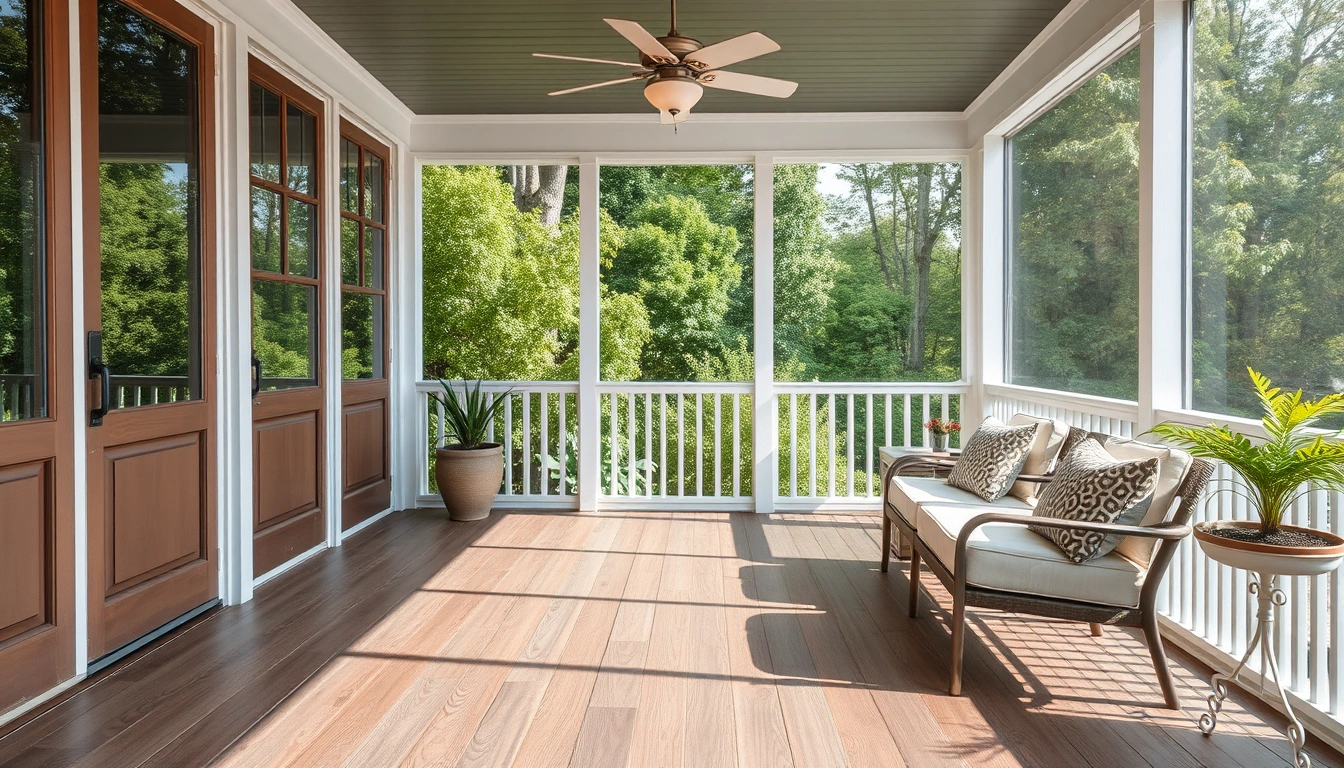
Porcelain tile suits the screened porch owner who wants a durable finished floor and can tolerate a surface that feels hard underfoot. It is the strongest pick when the porch is basically a protected outdoor room and when the structure can handle the extra weight of tile, mortar, and backer board. For people who want something that reads as finished architecture instead of deck boards, it looks polished. Clean, too.
Its biggest strength is stability. Porcelain is dense, low-absorption, and unfazed by splashes or damp air that can bother wood-based products. It cleans well, stands up to pet claws better than many softer finishes, and does not need staining or sealing the way wood does. In screened porch flooring options compared for durability and comfort, that matters because dust, pollen, and leaf debris still come inside. Grit has nowhere to hide.
The weak spots show up late, which is annoying. Tile is unforgiving if the base moves. A porch with flex, a slab with crack issues, or a poor install can end up with cracked grout or cracked tile. It is hard, and it can feel cold in shoulder seasons. If you want a floor where a child can sit for an hour without a pad, this is not my first choice.
I would recommend porcelain tile for: covered porches over slabs, porches in hot climates, and owners who value long-term wear over softness. I would skip it for: elevated porches with bounce, older framing, or any space where moisture is still being solved at the structure level.
Composite decking and PVC boards: the comfort-to-maintenance trade
Composite decking and PVC deck boards fit screened porches where the owner wants something easier than tile but tougher than many wood products. If the porch sits on sleepers or over a framed deck, this is often the most forgiving route. It gives you a deck-like feel without the sanding, staining, or splinter worries that come with wood.
The appeal is plain: these products are built for exterior exposure. Wet shoes, tracked-in debris, and routine washing are not a big deal for them compared with many traditional wood floors. PVC boards, in particular, are sold as low-maintenance exterior boards and are often marketed as moisture resistant; composite boards are more common and usually easier to source in many profiles and colors. Retail availability is wide, and the pricing gap can be wide too. Common deck boards can range from about $2 to $5 per linear foot for basic composite options, while premium PVC lines often run higher depending on profile and finish.
But comfort is only relative. Composite and PVC can still run warm in direct sun, and darker colors may feel hot under bare feet. They can also look synthetic, more “outdoor deck” than “interior room.” If the whole point is to mimic a finished family room, I would pass. Another trade-off: lower-end boards can show surface scuffs and dirt more readily than buyers expect.
I would recommend composite or PVC boards for: families, pet owners, and anyone who wants exterior durability without the cold, rigid feel of tile. I would skip them for: porch designs that need a true interior aesthetic, or spaces where full sun will make the surface too hot.
What about wood: the warmest feel, but the highest upkeep
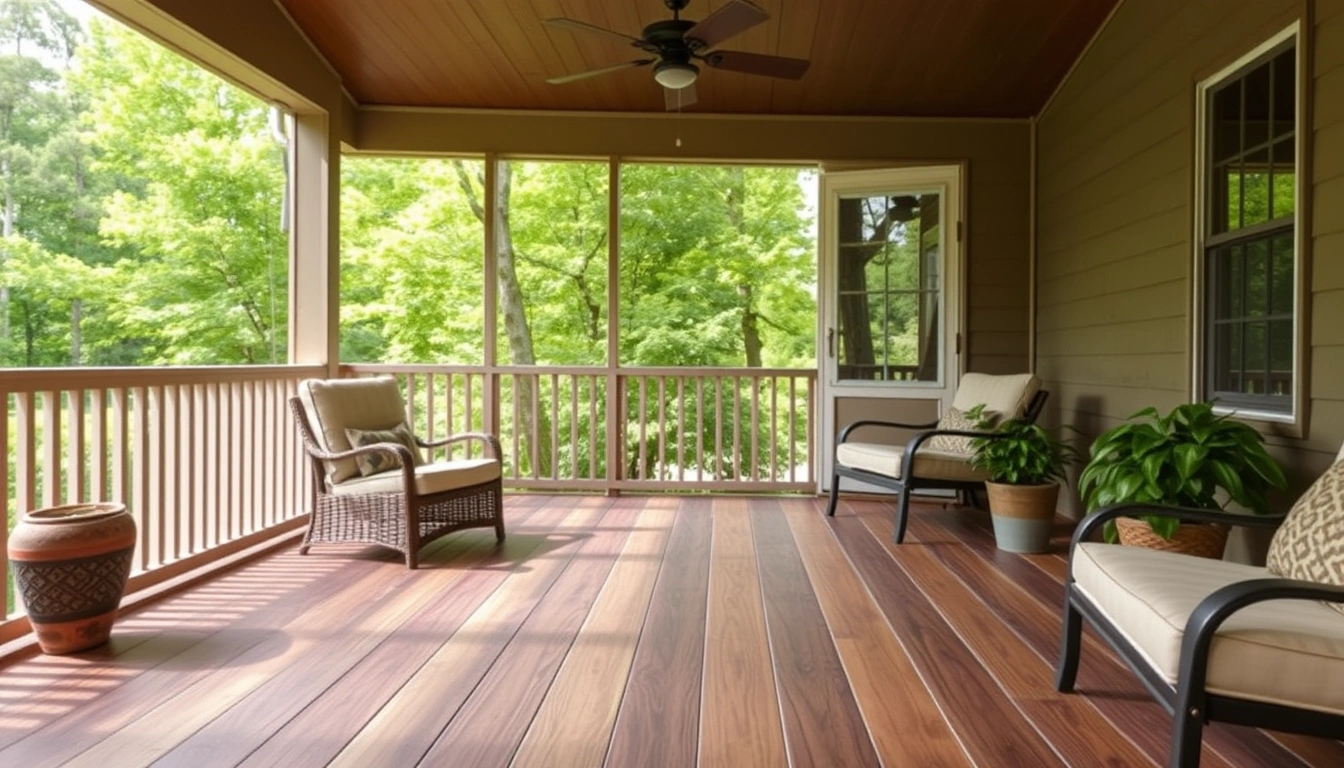
Wood only wins if the porch is more about character than low maintenance. Want the warmest feel underfoot and a floor that ages into a traditional porch look? A well-chosen wood floor is still hard to beat visually. The tactile difference is real — wood feels less severe than tile and less synthetic than composite. That matters in a screened porch you plan to use every evening.
But wood is also the least honest pick for a low-maintenance wish list. Even pressure-treated lumber, cedar, cypress, and tropical hardwoods all ask for periodic maintenance if you want them to last, and you should consult a local building professional or flooring contractor about species choice, fastening, and finish schedules for your climate. Rain is only part of the story. Humidity, condensation, and trapped pollen can all speed up grime and finish failure. A wood floor that is ignored will weather unevenly, cup, check, or discolor. The USDA Forest Service’s wood handbook notes that wood’s dimensional movement is tied to moisture content, which is why exterior wood work depends so heavily on detailing and upkeep.
Choose wood because you accept maintenance as part of the design, not because someone sold you “natural” as a shortcut to easy. A good stain schedule can keep it attractive; still, no wood exterior floor is truly hands-off. Not even close.
I would recommend wood for: traditional homes, moderate climates, and owners who are already committed to upkeep. I would skip it for: rental properties, busy families, and anyone who wants a floor that can go a season without attention.
Concrete, painted concrete, and concrete coatings: the practical answer on a slab
Concrete is the practical answer when the porch already sits on a slab and the surface is sound. If the structural floor is concrete, the cheapest mistake is often covering it with something more delicate before fixing moisture and cracking first. Bare concrete is durable, simple to hose off, and naturally suited to a screened porch that sees wet shoes and dirt.
Comfort is the problem. Bare concrete is hard, can be chilly, and rarely feels finished without some treatment. Consult a local flooring or concrete professional if you are unsure about slab moisture, because coatings are only as good as the prep and the moisture conditions beneath them. If moisture vapor is coming through the slab, coating failures can happen. So the slab needs a moisture check before the pretty stuff goes down. The American Concrete Institute and the Portland Cement Association both have guidance on moisture and slab performance that is worth consulting before you cover a suspect slab.
I would recommend concrete or a proper coating for: slab porches that need a durable, low-cost surface and already drain well. I would skip it for: anyone wanting warmth, softness, or a residential indoor feel unless they are prepared to add rugs or floor mats. It is a utility answer, not a cozy one.
The honest side-by-side
Here is the decision table I would actually use if I were comparing these options for a screened porch.
| Criteria | Porcelain tile | Composite/PVC decking | Winner for [condition] |
|---|---|---|---|
| Moisture tolerance | Excellent on a sound base; grout and substrate still matter | Very good for exterior exposure and damp use | Composite/PVC for porches with more splash or humidity |
| Barefoot comfort | Hard and often cold | Better underfoot, though can still heat up | Composite/PVC for family use |
| Resistance to scratches and pet traffic | High | Moderate to high, depending on board quality | Porcelain tile for pets and grit |
| Structural demand | High; weight and movement matter | Moderate; usually easier on framed porches | Composite/PVC for older framing |
| Maintenance | Low if grout and substrate stay sound | Low to moderate; cleaning is easy but finish quality varies | Porcelain tile for minimum upkeep |
| Repair complexity | Higher; cracked tile or grout is a nuisance | Board replacement is often simpler | Composite/PVC for easier spot repairs |
| Visual finish | Most indoor-like | Most deck-like | Porcelain tile for polished rooms |
| Heat in sun | Can feel cool to neutral | Can get hot, especially darker colors | Porcelain tile for sunny porches |
| Best fit by structure | Slab or very stiff subfloor | Framed porch or sleeper system | Depends on the build, not the style |
The table makes the main point clear: tile wins on durability and finish quality, while composite or PVC boards win on forgiving installation and day-to-day comfort. That is the real trade. Simple, but not easy.
What choice I would make for different screened porches
I would choose porcelain tile for a screened porch over a slab in a hot or mixed climate, especially if the space is supposed to feel like an extension of the house. It gives the most durable finished surface and the cleanest indoor look. Wrong choice if the framing is bouncy or if softness matters.
I would choose composite or PVC decking for a framed screened porch, especially where family traffic, wet shoes, or pets are part of daily life. It is the better balance of durability and comfort for most people because it avoids the fragility of tile installation and feels less punishing underfoot. Not the right answer if you want a room-like finish.
I would choose wood only if I wanted the traditional porch look badly enough to accept ongoing maintenance. Bare or coated concrete makes sense only when the porch already has a slab and utility matters more than feel.
When should you change the answer entirely?
But the verdict changes in a few cases.
First, if the porch has visible moisture problems, fix the structure before you pick any finish. A floor over chronic intrusion is the wrong project. Second, if the porch is a second-story build with noticeable flex, tile stops being the smart choice no matter how good it looks. Third, if the porch gets brutal afternoon sun, dark composite boards may be less comfortable than a lighter tile. Fourth, if you want a porch to feel like a sunroom and you plan to use rugs, tile becomes much easier to live with.
I would also revisit the whole comparison if your climate brings freeze-thaw cycles plus trapped moisture. Then substrate prep and drainage can matter more than the surface choice. Standards from tile and concrete organizations exist for a reason: the finish cannot outsmart bad base conditions. The Tile Council of North America publishes installation standards, and the American Concrete Institute and Portland Cement Association both emphasize moisture management for slab performance.
So which screened porch floor should you choose?
Choose porcelain tile if your porch is structurally stiff, well drained, and you want the toughest, most finished-looking floor. Choose composite or PVC decking if you want the best mix of comfort, moisture resistance, and low maintenance on a framed porch. Choose neither if the porch still has moisture intrusion, rotten framing, or a bouncy subfloor, because no finish will rescue that.
FAQ
Is porcelain tile too cold for a screened porch?
Yes, often it can feel cold in shoulder seasons, especially over a slab. That is a comfort trade-off, not a defect.
Do composite boards warp less than wood?
Yes, they are generally more stable than many wood options in damp exterior conditions, but they still depend on proper installation and ventilation.
Can I put carpet on a screened porch floor?
You can, but I would treat it as a comfort layer, not the main flooring strategy. Outdoor rugs can hide a lot and also trap moisture if the base is not dry.
Is bare concrete a bad choice?
Not always. It is a sensible choice when durability matters more than comfort and the slab is already sound, dry, and properly drained.
Which floor is easiest to clean?
Porcelain tile and composite/PVC boards are both easy to clean, but tile usually wins when you want the highest resistance to stains and grit.